
Dental Med Clinic
Scaling in Luxembourg
Why is scaling important?
After every meal, an invisible film forms on your teeth. It’s called dental plaque—a deposit made up of bacteria and food residues. A good brushing removes a large part of this plaque. But some areas are hard to reach: the spaces between teeth, the gumline, the inner surfaces of molars. In these nooks, plaque accumulates. And over time—usually in just a few days—it mineralizes. It hardens and becomes tartar. At that stage, no mouthwash or floss can remove it. Only a specialist instrument and a professional can dislodge it.
Tartar isn’t just an aesthetic problem—though it does yellow or grey teeth over time. It is above all a permanent breeding ground for bacteria, stuck against the gums. These bacteria continuously irritate the gums. At first, they bleed a little when brushing. That’s often where the alarm stops for many people. But if nothing is done, the inflammation progresses. The gums recede. The bone that supports the teeth can be affected. This is called periodontal disease — one of the main causes of tooth loss in adults. Regular scaling breaks this cycle before it settles in. It really is the foundation of good oral hygiene.
Beyond the gums, tartar has other concrete effects:
• It causes bad breath — the accumulated bacteria produce sulfur compounds
• It dulls the teeth — colored deposits stick to it more easily
• It promotes the appearance of new cavities — especially in areas we can’t easily see
• It complicates future treatments — a tooth surrounded by tartar is more difficult to treat properly
How often should you get a scaling?
There is no single answer that’s valid for everyone. The frequency depends on several factors specific to each patient.
Profil
Fréquence recommandée
Good hygiene, little tartar, healthy gums
Once per year
Good hygiene, moderate tartar
Twice per year
Significant tartar, sensitive gums
2 to 3 times per year
Patients wearing dental braces
2 to 3 times per year
Smokers
At least twice per year
Diabetics or patients on certain medications
According to the dentist's recommendation
In general, once or twice a year is suitable for most adults.
For children, the frequency is determined during routine check-ups. Their teeth accumulate less tartar than adults, but monitoring is still important.
What exactly happens during the procedure?
How does a scaling procedure
take place at Dental Med?
Initial examination
Initial examination
Initial examination
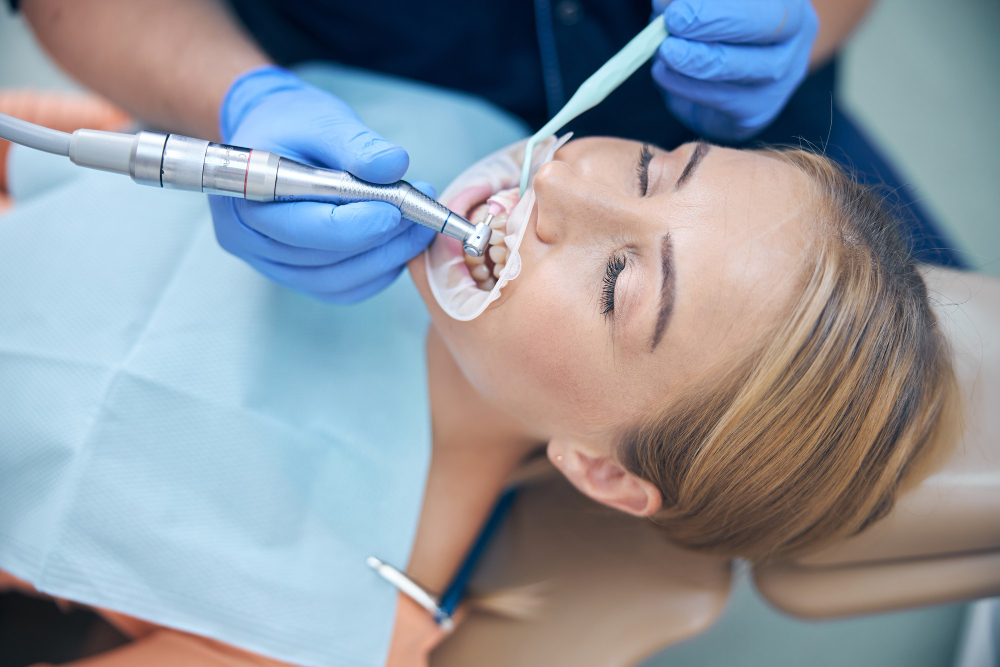
Ultrasonic scaling
Polishing
Personalized advice

Professional staff

Emergency

Disponibilités en soirée
Please don’t hesitate to contact us
Book an appointment for a dental scaling in Luxembourg
Call us: +352 261270 | 122, Route D'Arlon L-1150 Luxembourg (Rollingergrund / Belair-Nord) | Open until 9pm — appointments available at weekends.


